You’ve probably landed here because you’re trying to figure out which platform to use, or whether you made the right call with whichever one you already picked.
The short answer: Wix and Squarespace are solid tools. Just not tools built with your business in mind.
They were built for photographers, restaurants, boutiques, and portfolio sites. A handyman business has different needs. Mostly local search traffic, mobile callers, and getting Google to trust your site enough to show it to people in your city.
That’s where the comparison gets interesting.
What each option is actually built for
Before comparing them side by side, it helps to understand what each one was designed to do.
Wix is a drag-and-drop builder aimed at small businesses that want flexibility without code. It has a massive template library, decent e-commerce support, and has been adding more SEO tools over the years. It’s genuinely easy to use.
Squarespace leans more toward design-forward businesses. The templates are arguably prettier, the interface is cleaner, and it tends to attract creatives: designers, photographers, small shops. SEO control is more limited than Wix.
Custom-coded sites aren’t a platform. They’re built from scratch by a developer, usually using a framework like Astro or Next.js, which means there’s no bloat, no platform restrictions, and no monthly fees to a builder.
If WordPress is also on your shortlist, we cover it separately in is WordPress a good choice for a handyman website?
None of these is objectively bad. The question is which one gives a handyman business the best shot at getting found and getting calls.
How they compare on what handymen actually need
Local SEO is where most handyman websites win or lose. Let’s go through the things that matter.
Page speed
Google uses page speed as a ranking signal, and mobile visitors will leave a slow site in under three seconds. This is where custom-coded sites have a real edge.
Wix and Squarespace load extra JavaScript, style assets, and platform overhead with every page, even when you don’t need it. A custom site loads only what’s actually on the page. The difference can be a full second or more on mobile, and that matters when someone’s sitting in a parking lot Googling for a handyman.
Local SEO control
Winning locally means showing up when someone types “handyman in [your city]” or “handyman near me.” That requires a few specific things: proper schema markup, clean URL structures, location-specific landing pages, and fast load times.
Wix gives you some of this. You can set meta tags, add schema via apps, and create location pages. It’s not impossible, just more friction than it should be. Squarespace gives you even less control. Some schema options are buried or automated in ways you can’t easily override.
Custom code gives you complete control. Every tag, every URL, every piece of schema is set exactly how you want it. No plugin workarounds, no platform restrictions.
Service area and location pages
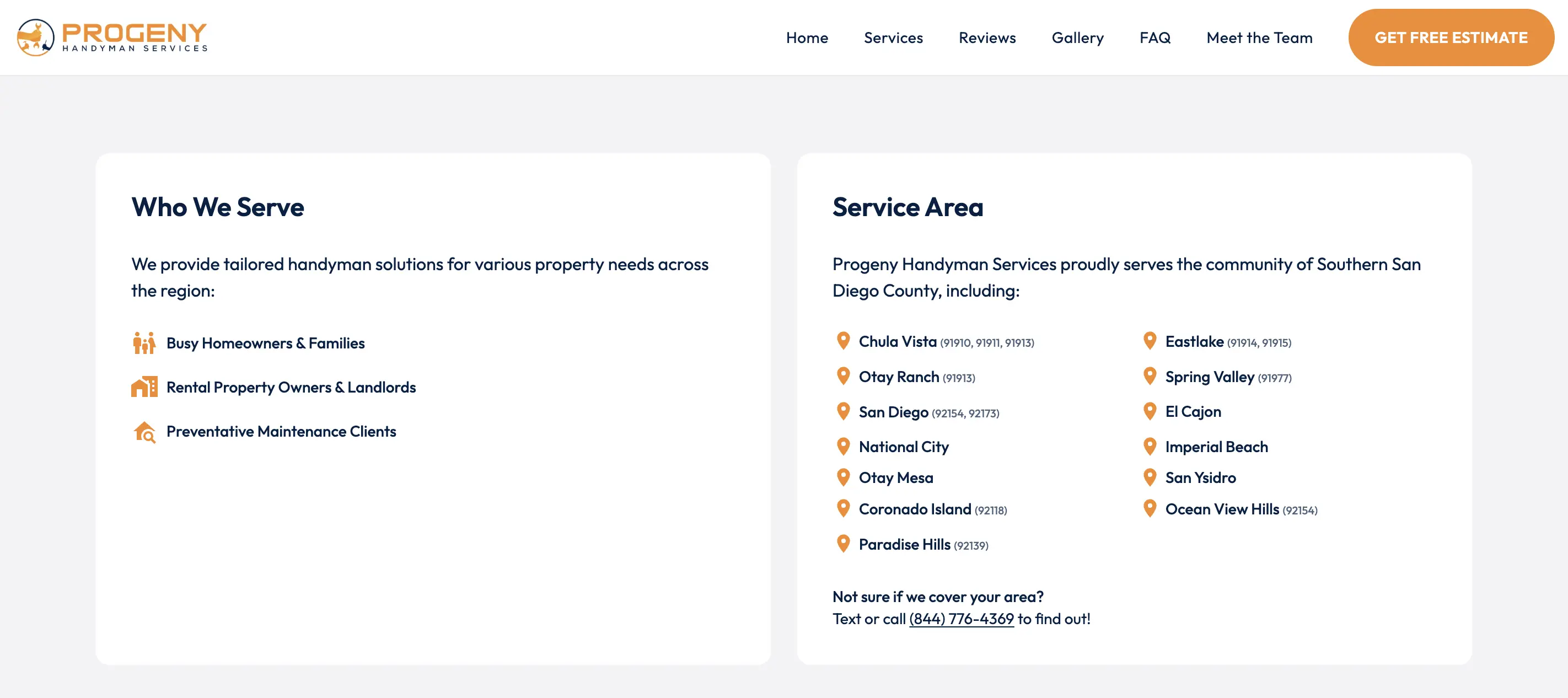
Most handymen serve multiple cities or neighborhoods. If you do work in five towns, you want a page for each one: that’s five more chances to show up in local search.
Wix can do this, but you’re essentially building five near-identical pages inside a builder that isn’t designed for this kind of work. Squarespace makes it harder. Custom sites are built for this from the start.
Mobile experience
Most people searching for a handyman are on their phones. The site needs to be fast, the phone number needs to be tappable at the top, and the form needs to work without pinching and zooming.
Both Wix and Squarespace produce mobile-friendly templates. This isn’t really a differentiator anymore, it’s a baseline. Custom sites should do this too, and if built right, they’ll do it faster.
The hidden costs of DIY builders
The monthly price of Wix or Squarespace looks cheap. And it is, upfront.
What it doesn’t show you is the time you’ll spend setting it up, the SEO apps you’ll pay for on top of the base plan, and the ongoing maintenance of keeping everything working when the platform updates something.
Wix business plans run $17 to $35 a month. Squarespace runs $16 to $49 depending on the plan. Add a domain ($15 to $20/year), maybe an SEO app ($10 to $20/month), and a booking tool if your plan doesn’t include one.
You’re not far from $60 to $80 a month once it’s all stacked up. And that’s before your time. For a full side-by-side of every option, see how much a handyman website should cost.
The bigger hidden cost is opportunity cost. If the site doesn’t rank because the platform made it harder, you’re not paying $35 a month. You’re paying the difference between the calls you’re getting and the calls you could be getting.
When custom code actually makes sense
Custom code isn’t for everyone. If you’re in your first year of business and just need something online while you figure things out, Wix will get you there faster and cheaper.
But if you’ve been running your handyman business for a while, your phone should be ringing more than it is, and you’re tired of working around platform limitations, a custom site starts making real sense.
The build cost is higher upfront. But there are no monthly platform fees, no plugin subscriptions, no restrictions on what pages you can create or how URLs are structured. The site is yours. And because it’s built specifically for handyman businesses, it’s set up for local search from day one, not retrofitted for it later.
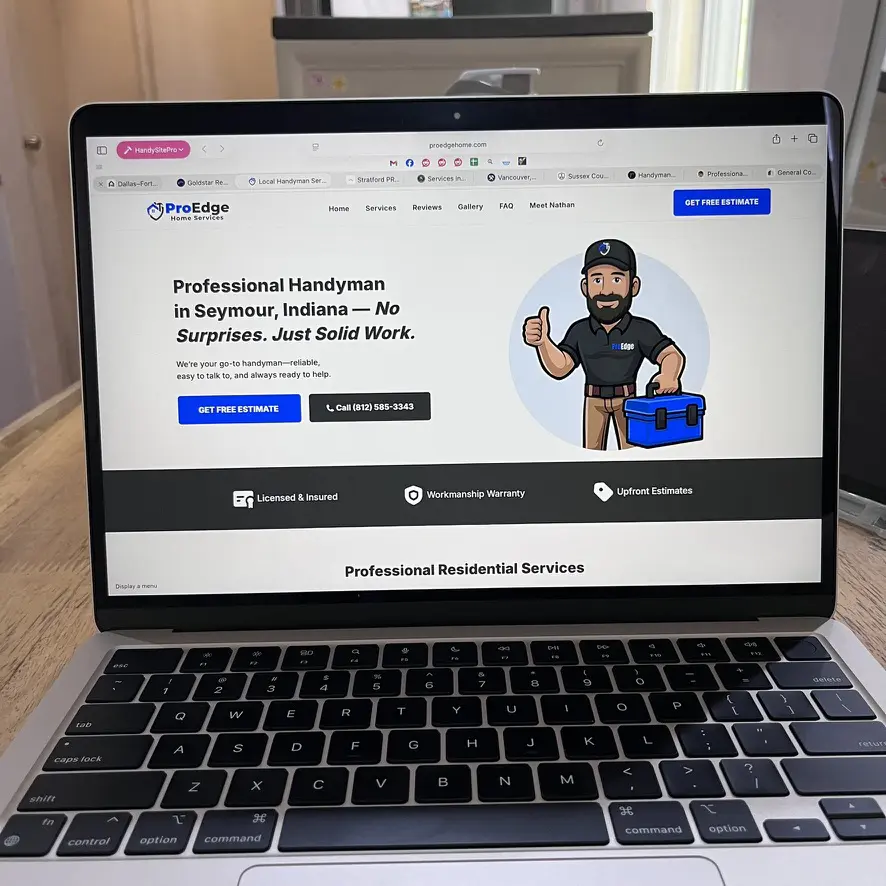
That’s what HandySitePro does. Every site I build is custom-coded from scratch: no page builders, no WordPress templates, no Wix drag-and-drop. Just a clean, fast site built around what actually gets handymen leads. You can see what’s included in the package and browse the portfolio to see real examples.
Frequently Asked Questions
Is Wix good enough for a handyman business? It’s good enough to get online quickly. For local search rankings, it’s workable but has real limitations, especially if you need multiple service area pages or tight control over technical SEO.
Does Squarespace rank well on Google? Squarespace sites can rank, but the platform gives you less control over technical SEO than Wix or a custom site. For local businesses competing in a specific city, that lack of control can hurt.
How much does a custom-coded handyman website cost compared to Wix? Wix runs $17 to $35 a month plus extras. A custom site has a higher upfront cost but no ongoing platform fees. Over two or three years, the total cost is often similar, and the custom site performs better. You can learn more about HandySitePro’s handyman website design service here.
Can I move my Wix or Squarespace site to a custom site later? You can’t migrate the site itself, the content lives inside the platform. But you can move your domain and rebuild the site on a custom codebase. It’s a fresh build, not a transfer.
What’s the biggest SEO difference between Wix and a custom site? Page speed and structural control. A custom site loads faster (critical for mobile) and lets you set up location pages, schema markup, and URL structures exactly as they need to be, without workarounds.
Wix and Squarespace aren’t bad choices. They’re just general-purpose tools being asked to do a specialist job.
If you want a handyman website that’s fast, built for local search, and doesn’t require you to fight the platform to get results, a custom site is worth the investment.
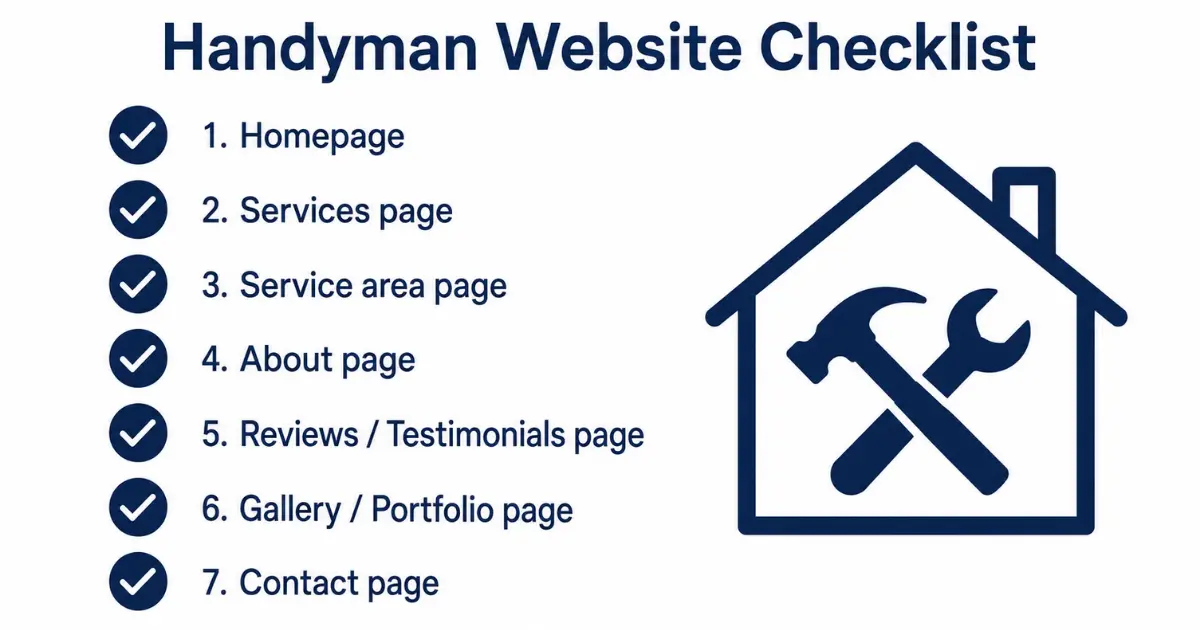
HandySitePro builds custom-coded websites exclusively for handyman businesses. Seven pages, built from scratch, with local SEO baked in from the start.