The best handyman website examples share five traits: a visible phone number, a clearly named service area, trust signals near the top of the page, copy that sounds human, and fast mobile loading. Below are five real handyman websites built around those traits, plus one specific feature worth stealing from each.
Most “best website examples” posts show you pretty homepages and call it a day. That’s not that useful. What actually matters is why a site works. Does it make the phone ring? Does it build trust in the first five seconds? Does it show up when someone searches “handyman near me”?
I’ve built handyman websites for clients across the US and Canada. The sites that perform best all share a few things in common, even though they look nothing alike. (You can browse more of them in our portfolio.)
1. Stratford PRO Handyman (Stratford, Ontario)
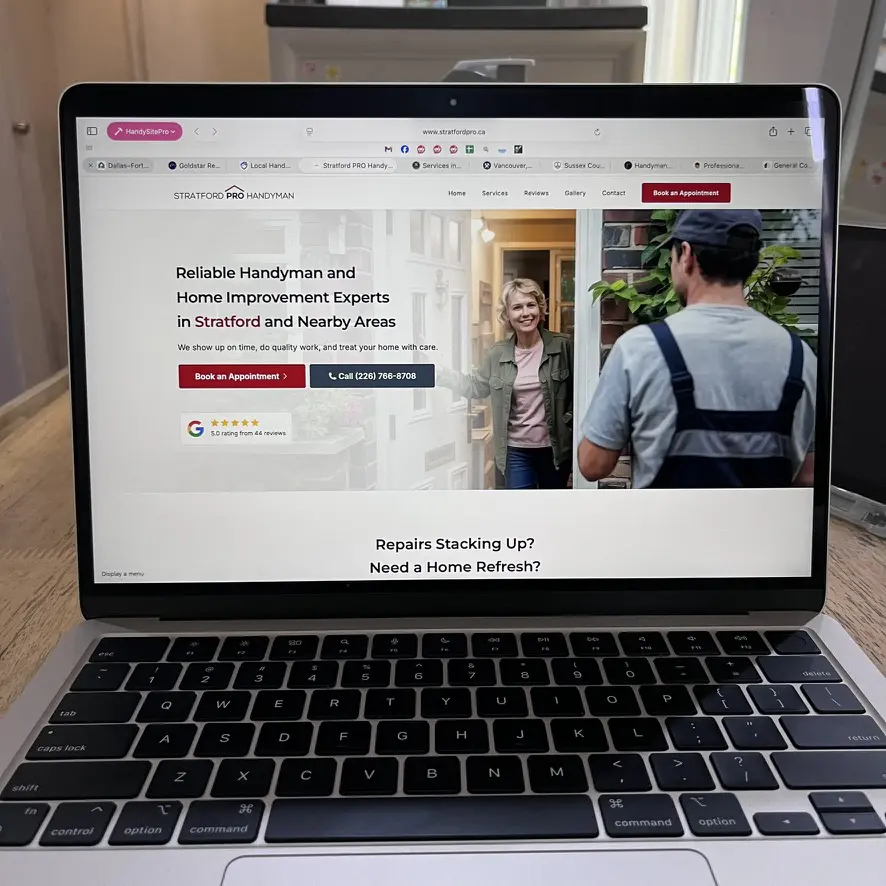
Stratford PRO keeps things simple. The homepage leads with a straightforward promise: on time, quality work, care for your home. No jargon, no overpromising.
What to steal: the service categories are grouped into four clear buckets (repairs, installations, painting, remodeling) instead of a long list of forty individual tasks. It’s easier to scan and easier to remember.
2. Mountain West Handyman (Boise, Idaho)
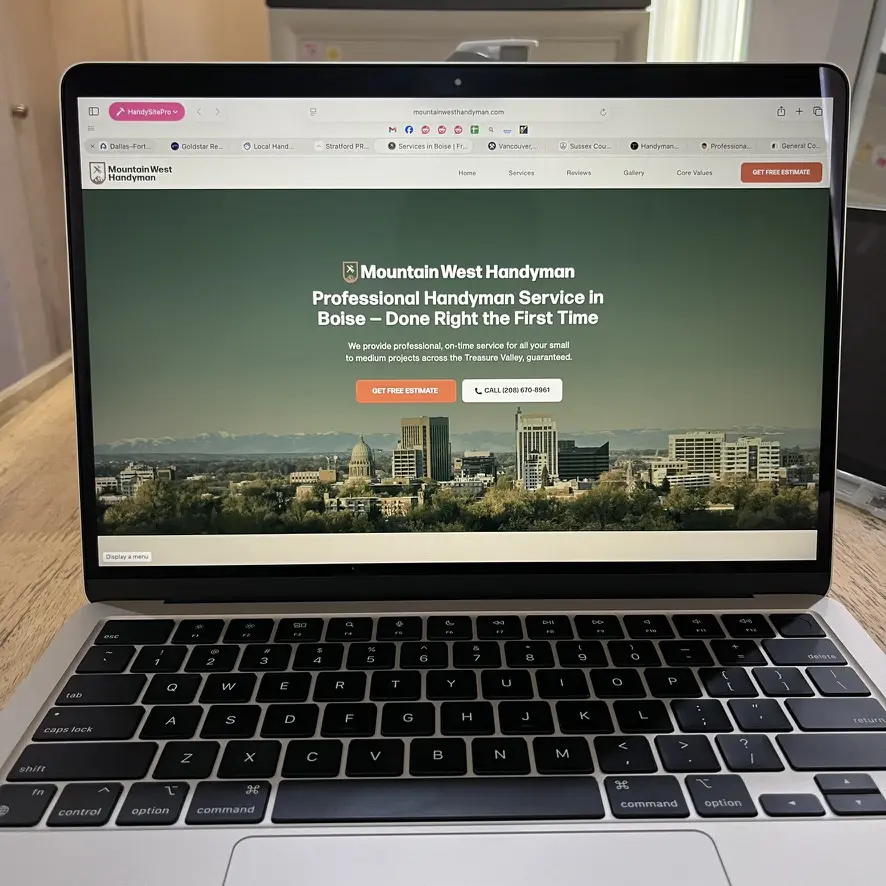
Visit mountainwesthandyman.com →
This site leans hard into trust signals. A three year workmanship warranty. A no change order guarantee. Licensed, insured, and background checked technicians. All of it stated plainly, right where a visitor will actually read it.
What to steal: the “areas we cover” section lists out every neighboring city by name. That’s not decoration. Each one is a separate opportunity to show up in local search results for a nearby town.
3. Fixtopher Handyman Services (Vancouver, BC)
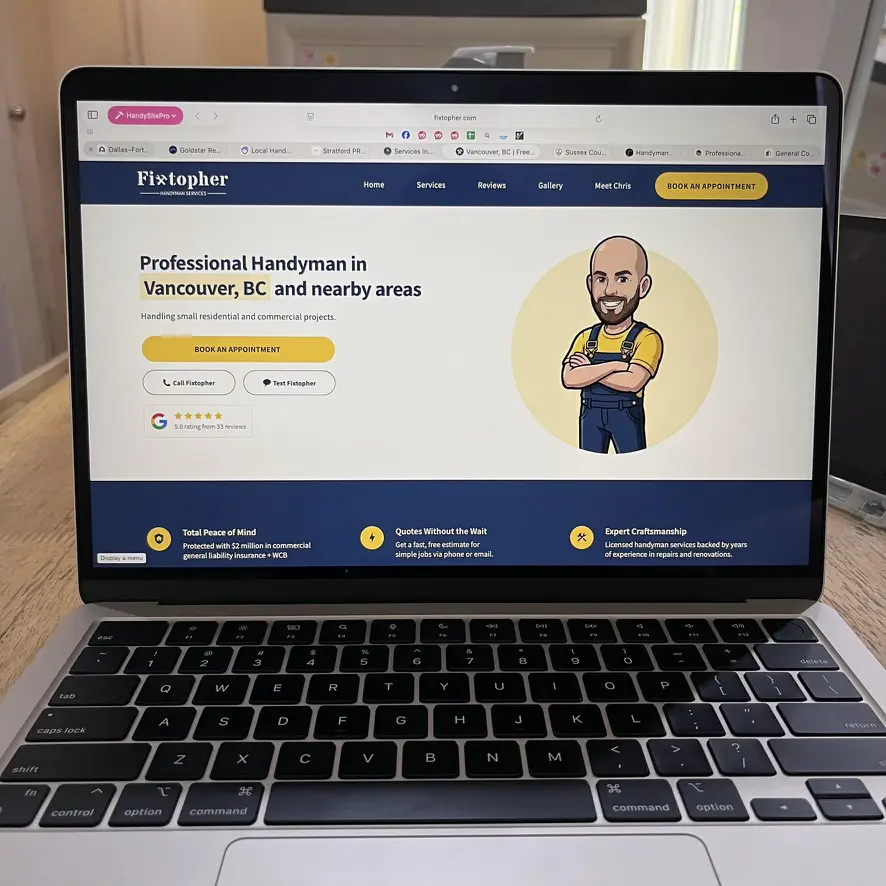
Fixtopher offers a genuinely huge range of services, and the site handles that without feeling cluttered. Everything is grouped by category: general repairs, painting and drywall, carpentry, electrical, smart home, appliances, plumbing. A visitor can jump straight to the section they need.
What to steal: the owner’s bio doesn’t just say “years of experience.” It mentions his actual background (logistics and nursing) because that history builds a specific kind of trust that a generic “10 years experience” line never will.
4. The Tools Handyman (North Dallas, Texas)

The Tools Handyman covers a lot of ground, from kitchen remodels to pipe repair, and the site keeps it organized into four categories: remodeling, plumbing, carpentry, and general repairs. Each one links to five specific sub-services instead of dumping everything into one paragraph.
What to steal: those sub-service links aren’t just for visitors. Each one is its own page that can rank in Google for a specific search like “faucet installation Garland TX.” One homepage section quietly creates twenty opportunities to show up in local search.
5. ProEdge Home Services (Seymour, Indiana)
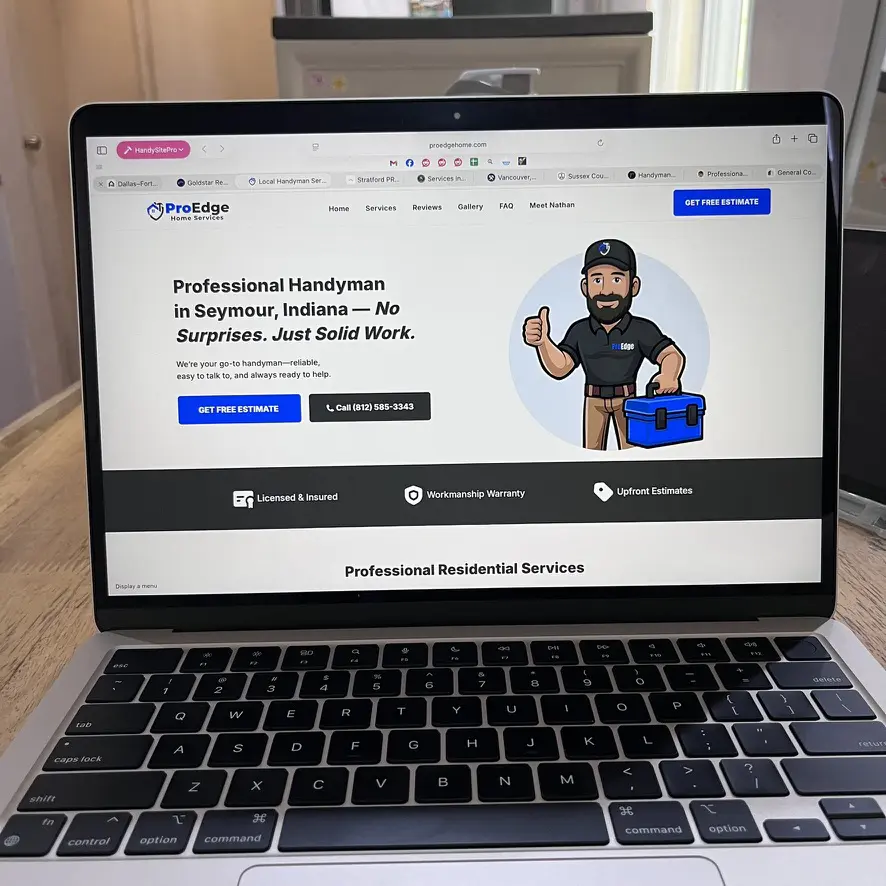
ProEdge leads with something a lot of handyman sites skip: a specific reason to trust them beyond “we do good work.” Veteran owned, nearly twenty years of trade experience, upfront estimates with no surprise scope changes. Every claim is concrete, not vague.
What to steal: the gallery doesn’t just show photos, it labels each one. “Structural attic repair and floor reinforcement.” “Under-sink plumbing repair.” “Bathroom renovation before and after.” A visitor scanning quickly can immediately see if ProEdge has done the exact job they need.
What These Sites Have in Common
Different trades, different regions, different design choices. But every one of these does the same handful of things right:
- The phone number is visible on every page. Not tucked in the footer.
- The service area is spelled out by name, city by city. Not just “we serve the local area.”
- Trust signals show up early. A warranty, a license number, years in business, whatever it is.
- The copy sounds like a real person wrote it. Not a template filled in with placeholder text.
- The site loads fast and works on mobile. Most visitors are searching from their phone, standing in the driveway of the house they need fixed.
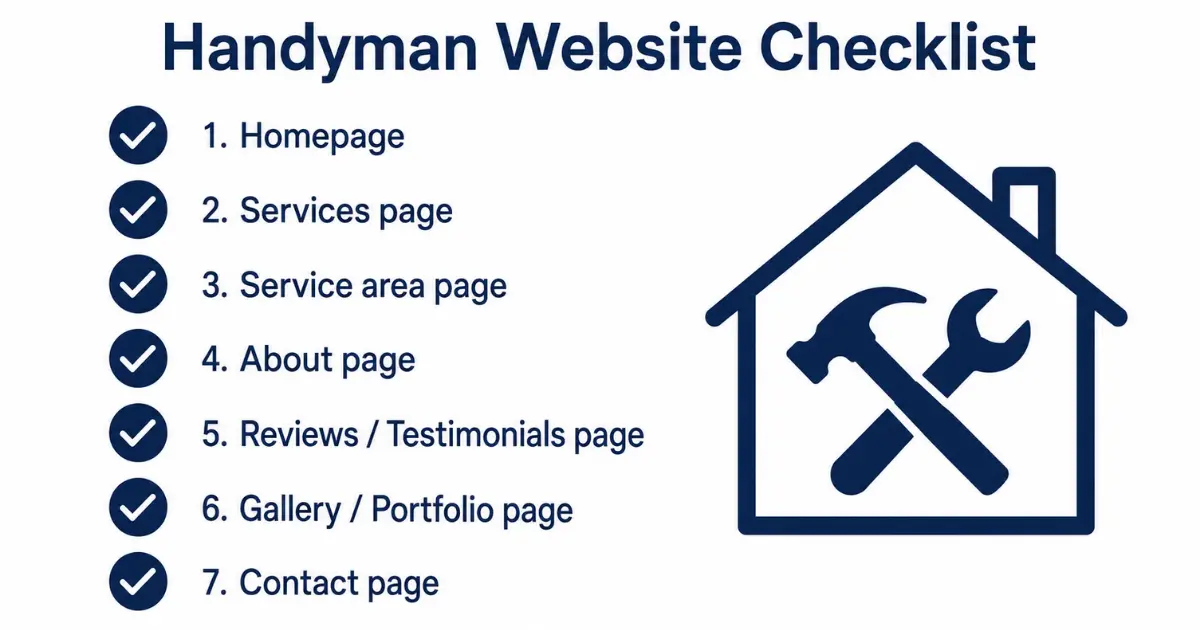
None of this is complicated. It’s just easy to skip when you’re building a site yourself, or handing it off to someone who’s never built for a handyman business before. Run your own site through the handyman website checklist to spot what’s missing.
Frequently Asked Questions
What makes a handyman website design good? A good handyman website makes it easy to call, clearly lists services and service area, shows trust signals like licensing or reviews, and loads fast on mobile. Looks matter less than whether it actually converts visitors into calls.
Should my handyman website show my service area by city? Yes. Listing specific cities and neighborhoods you cover helps both visitors and Google understand exactly where you work, which improves your local search rankings.
Do I need a personal story or bio on my handyman website? It helps. A short, honest bio builds trust faster than a generic “years of experience” line, especially for homeowners who are inviting someone into their house.
How many services should I list on my homepage? Group related services into four to eight categories instead of listing every single task. It’s easier to scan and less overwhelming for a first-time visitor.
Every site above was custom-built by HandySitePro, purpose-made for handyman and home service businesses instead of adapted from a generic template. If your current site doesn’t do what these do, that’s worth fixing.
We build custom-coded sites for handyman businesses, starting from scratch, without WordPress or page builders.