WordPress powers roughly a third of every website on the internet. So when a handyman business owner asks “should I build my site on WordPress?” it feels like a no-brainer. Everyone uses it. It must be good.
It is good. For certain things.
But “good in general” and “good for a solo handyman trying to rank locally and get more calls” are two different questions. I’ve built enough home service websites to know that WordPress solves problems most handymen don’t have. And it creates a few they definitely don’t want.
Here’s the honest breakdown.
What WordPress is genuinely great at
Let’s be fair before getting critical.
WordPress is an excellent platform if you’re running a blog, a news site, a membership community, or a large business with a full-time marketing team managing it. The plugin ecosystem is massive. There are thousands of themes. You can build almost anything.
For content-heavy websites, like a regional contractor company publishing weekly articles and case studies, WordPress makes sense. The CMS is powerful, and editors can publish new content without touching code.
It’s also the platform most freelancers and agencies know. Which means there’s no shortage of people who can build you a WordPress site.
Where it gets complicated for handyman businesses
Here’s the thing. A typical handyman website needs about five to seven pages. A homepage, a services page, a contact page, an about page, maybe a reviews page and a gallery. That’s it.
WordPress was built to handle much more than that. When a platform is designed for complexity, simplicity becomes harder to maintain.
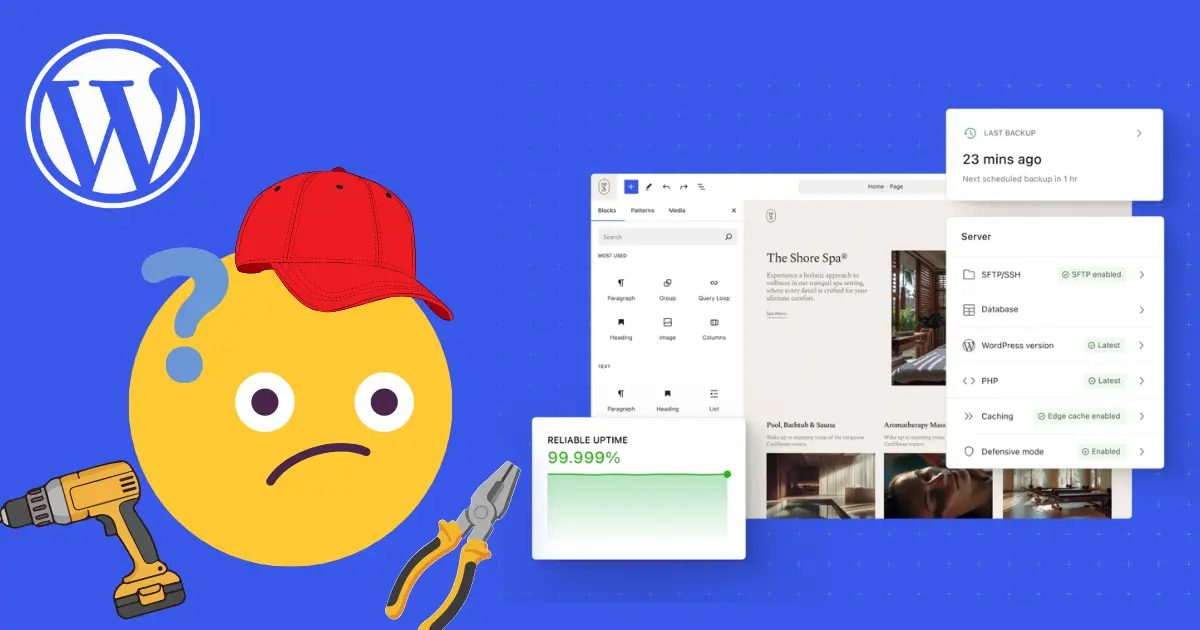
Plugins stack up fast. To get a WordPress handyman site doing the basics well, you’re usually looking at five to ten separate plugins covering contact forms, SEO, image compression, caching, spam protection, and security. Each one is its own piece of software with its own update schedule. When one conflicts with another (and it happens), your site breaks. Tracking down the cause is not a quick fix.
Speed is a real issue too. Page speed is a Google ranking factor. Most out-of-the-box WordPress sites are slow without significant optimization work. You need a caching plugin, a CDN, lazy-loaded images, and clean code underneath. A handyman business owner shouldn’t have to think about any of that. But on WordPress, someone does.
Themes require ongoing attention as well. That polished contractor theme you bought for $59? The developer will eventually stop supporting it. Security patches get missed. The design starts to look dated. Rebuilding on a new theme is nearly as much work as starting from scratch.
The real cost of maintaining a WordPress site
This is where people get surprised.
The WordPress software itself is free. A functional, maintained site is not.
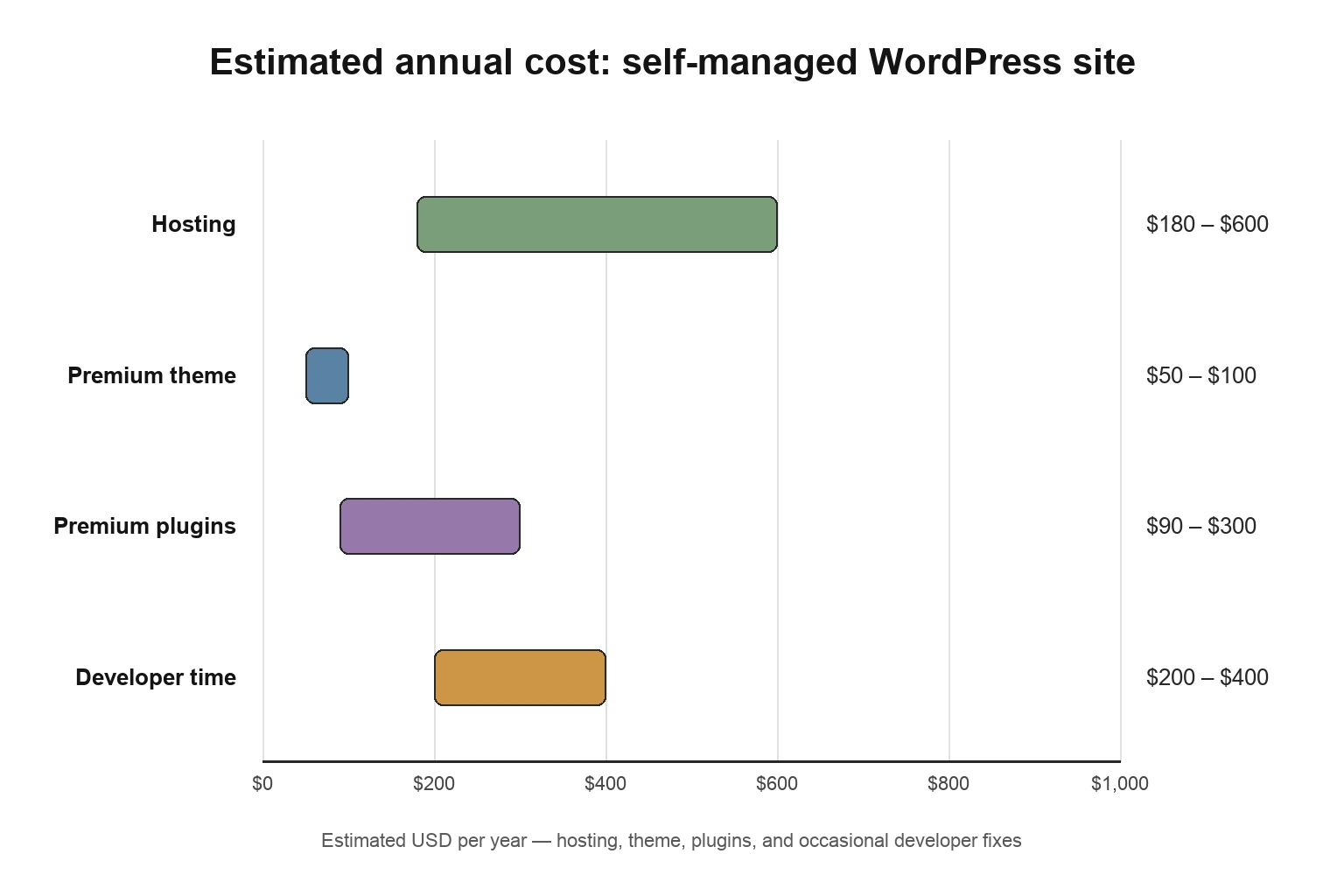
Here’s what a handyman business owner typically ends up paying to keep a WordPress site running properly:
- Hosting: $15 to $50 a month for decent managed WordPress hosting (cheaper hosts are slower and less reliable)
- Premium theme: $50 to $100 one-time, sometimes with annual renewal
- Premium plugins: Several useful ones charge annual fees, and $30 to $100 each isn’t uncommon
- Developer time: When something breaks, fixing it costs $75 to $150 an hour if you’re hiring out
Add it up over a year and you’re often looking at $500 to $1,000 or more in ongoing costs. Plus your own time dealing with update notifications, security warnings, and the occasional site going down at an inconvenient moment. See how that stacks up against every other route in our handyman website cost breakdown.
For a large company with a team, that’s manageable. For a solo handyman trying to finish jobs and answer calls, it’s a distraction.
The developer problem
Most people who build WordPress sites are generalists. They can set up WooCommerce for an e-commerce store, install a membership plugin for a coaching business, and build a handyman site, all from the same toolkit.
That versatility is useful. But it also means most WordPress developers don’t know handyman businesses specifically. They don’t know which pages matter for local search, how to structure a service area page, what makes a local contractor site actually convert, or why a phone number buried in the footer costs you leads.
You can hire an excellent WordPress developer and still end up with a site that looks great and gets no calls. Not because they did bad work. Because knowing how to build a site and knowing what a handyman business needs from a site are different skill sets.
So when does WordPress make sense for a handyman?
Honestly? A few situations.
If you already have a WordPress site that’s working and ranking, don’t burn it down. Maintain it. If you’re building a contractor brand with multiple divisions, a blog strategy, and a team to manage content, WordPress is a reasonable fit. If you’re comfortable with the platform yourself and don’t mind handling updates, it’s workable.
Still weighing platforms? Our Wix vs Squarespace vs custom code comparison breaks down the DIY builders side by side.
If none of those apply — if you’re a solo operator or a small crew who wants a professional site that shows up in local search and gets people to call — WordPress is probably more platform than you need.
A fast, clean, custom-coded site with the right pages and the right local SEO structure will outperform a bloated WordPress build in that context. Not because WordPress is bad. Because a simpler, purpose-built tool is a better match for the job.
That’s the whole idea behind HandySitePro’s handyman website design service. Every site is custom-coded from scratch. No WordPress, no page builders, no plugins to manage. Just a fast, focused handyman website built around what actually gets you leads. You can see what’s included in the package or browse the portfolio to see real examples.
Frequently Asked Questions
Is WordPress free for handyman websites? The software is free, but running a proper WordPress site isn’t. Hosting, premium themes, plugins, and occasional developer help typically add up to $500 to $1,000 or more per year for a small business site.
Can WordPress rank well in local search? Yes, but it takes real optimization work. A well-built WordPress site with proper SEO can rank. The issue is most WordPress handyman sites don’t get that level of attention, so they underperform against more focused builds.
What’s the difference between WordPress and a custom-coded website? WordPress relies on a content management system, themes, and plugins. A custom-coded site is written from scratch with no third-party dependencies. It’s typically faster, easier to secure, and simpler to maintain long-term. For a simple handyman site, custom code is usually the cleaner option.
Do I need a developer to maintain a WordPress handyman site? Not always, but eventually yes. When plugins conflict, themes break, or the site gets hacked, you’ll want someone who knows what they’re doing. Budget for it.
What platform does HandySitePro use? Custom code. No WordPress, no Wix, no page builders. Sites are hand-written and load fast without plugin management.
WordPress is the right tool for a lot of things. A handyman website that gets you local calls without an ongoing maintenance headache usually isn’t one of them.
If you want a website built specifically for your handyman business, no plugins, no bloat, no surprises, take a look at what HandySitePro puts together.