You have a website. It looks fine. And it gets you almost nothing.
That’s the most common complaint I hear from handymen, and it’s rarely a mystery. When I look at a quiet handyman site, the same problems show up almost every time. The contact info is buried. There’s no proof anyone has ever hired them. The site loads slowly on the exact device customers use to find them.
None of these fixes need a redesign or an ad budget. Below are the 5 changes that turn a website from an online business card into something that gets your phone ringing, starting with the one that matters most.
Fix 1: Put Your Phone Number Where Nobody Can Miss It
Most people visiting your site don’t want to read it. They want to call someone who can fix their problem this week.
So make calling as easy as possible.
Your phone number belongs in the top right corner of every page, as a clickable link on mobile. Not in the footer. Not on a separate contact page. If a homeowner has to scroll or tap twice to reach you, a chunk of them won’t bother.
Then add one clear button above the fold, something like “Call Now” or “Get a Free Quote.” One action, stated plainly. Sites that offer six options (call, email, form, chat, socials, booking) convert worse than sites that push one.
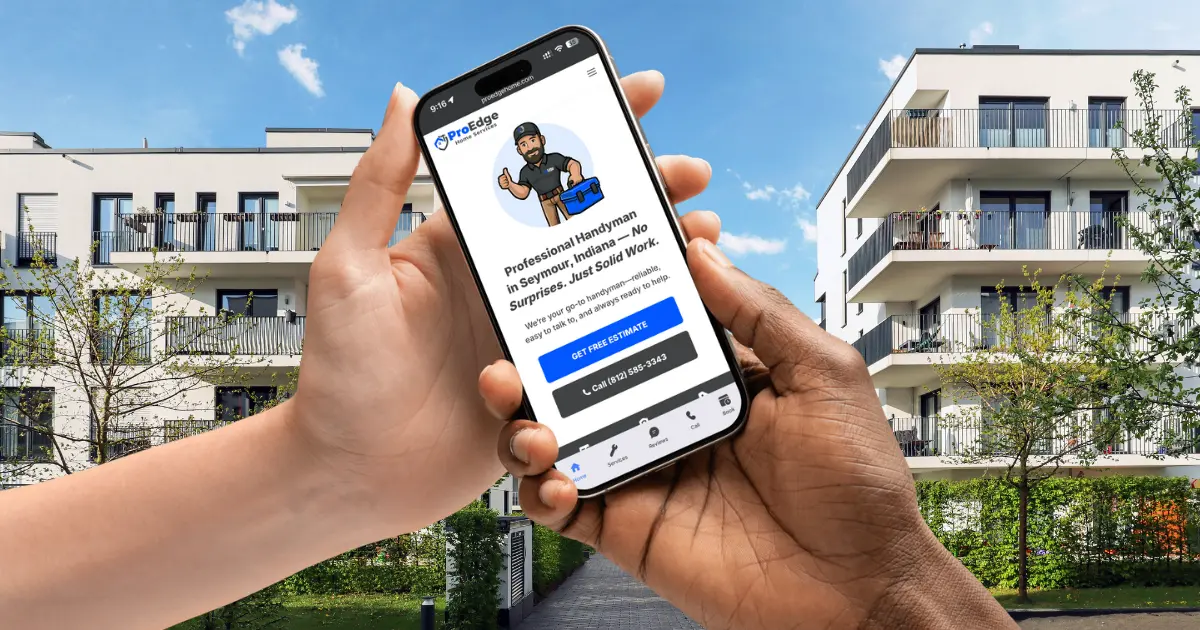
Quick test: open your site on your phone right now. Can you call yourself in one tap without scrolling? If not, that’s your first fix.
Fix 2: Show Proof You’re the Real Deal
A homeowner letting a stranger into their house is making a trust decision, not a price decision. Your website’s job is to lower that fear.
Three things matter most here.
Reviews on the page itself. Don’t just link to Google. Pull 3 to 5 of your best reviews onto your homepage where visitors can see them. Include the reviewer’s first name and town if you can.
Real photos of real work. Before-and-after shots of a deck repair beat a stock photo of a smiling model with a drill. Even phone photos work, as long as they’re yours. See how real sites handle this in these handyman website examples.
A photo of you. People hire the handyman, not the website. A simple photo with your name and a sentence about your experience does more than any polished graphic.
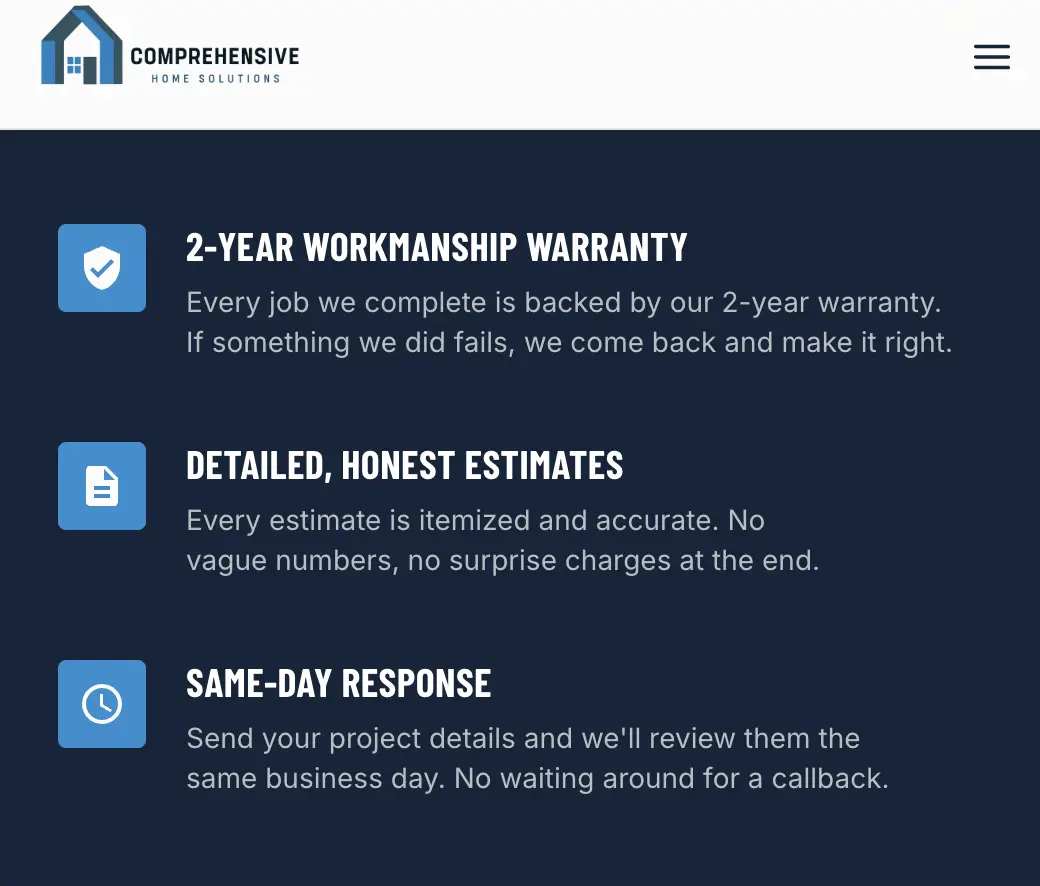
If you’re not sure what else your site is missing, run through this handyman website checklist. Most sites I look at are missing 3 or 4 items on it.
Fix 3: Win the “Handyman Near Me” Search
When someone types “handyman near me,” Google decides who shows up based partly on how clearly your website says where you work. Most handyman sites are vague about this, and vague sites lose to clear ones.
Here’s what Google needs to see.
Your city and service area written in plain text on your homepage. Not just in your logo or an image. Something like “Serving Plano, Frisco, and the North Dallas area” near the top of the page.
Your business name, address, and phone number matching exactly what’s on your Google Business Profile. Mismatches confuse Google and hurt your local ranking.
Page titles that include your trade and your city, like “Handyman Services in Plano, TX” instead of just “Home.”
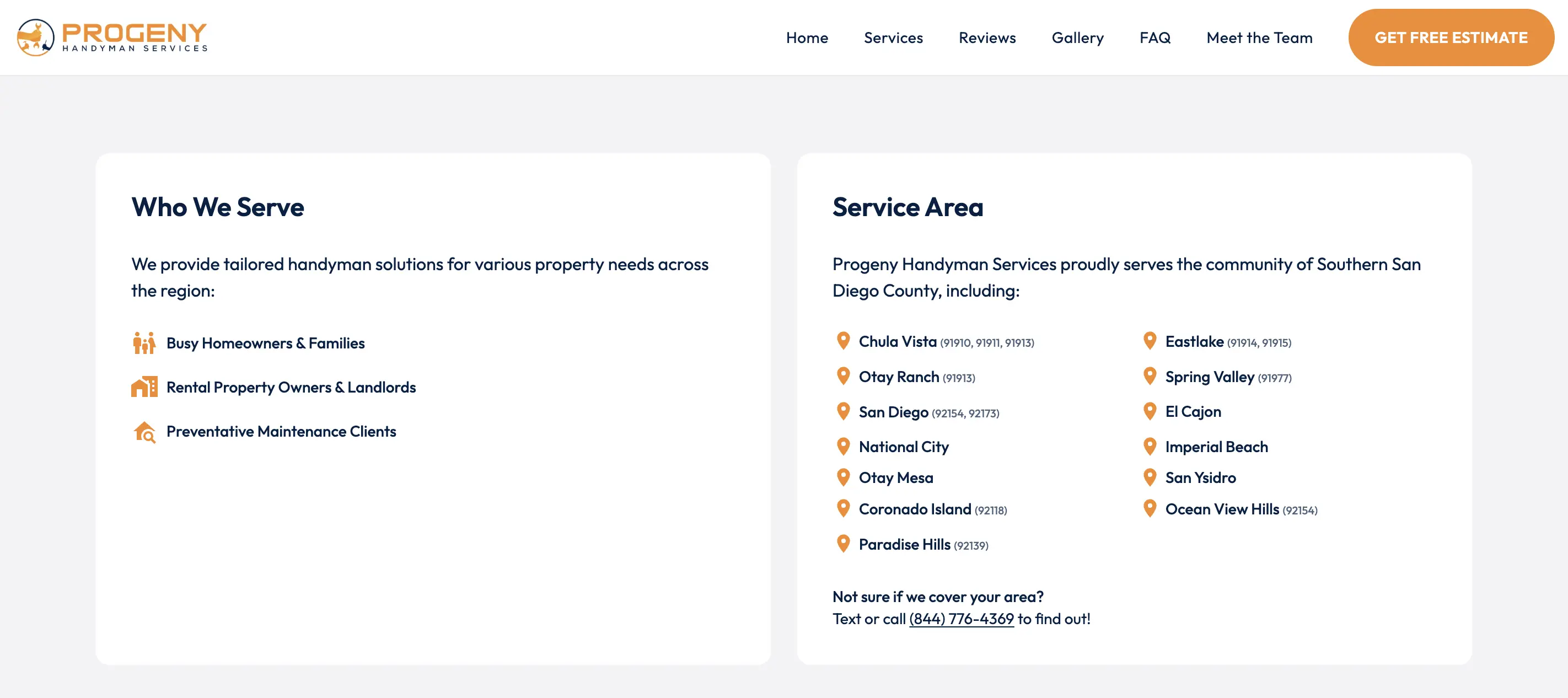
None of this is advanced SEO. It’s just being clear about who you are and where you work, in a way both customers and Google can read.
Fix 4: Fix Your Page Speed
Over half of your visitors are on a phone, often on spotty mobile data, standing in the room with the problem they need fixed. If your site takes 6 seconds to load, they’re back on Google before your header appears.
Slow handyman sites usually come down to two things: huge uncompressed photos and bloated page builders. Photos uploaded straight from your phone can be 4 or 5 megabytes each. Compress them to under 150kb and most sites speed up right away.
The builder problem is harder to fix. Wix, Squarespace, and heavy WordPress themes load a pile of code your site never uses. That’s one reason custom-coded sites consistently score faster, and why speed is a core part of how HandySitePro builds every site.
Test yours free at PageSpeed Insights. If your mobile score is under 70, speed is costing you leads.
Fix 5: Add a Clear Service Area Page
This one’s underused and it works. A service area page lists every city, suburb, and neighborhood you cover, each in plain text.
It helps in two ways. Customers on the edge of your area get a clear yes instead of guessing whether you’ll drive to them. And Google gets more chances to match your site to searches like “handyman in [suburb]” that your homepage alone won’t catch.
Keep it honest. List only places you’ll actually go, and if you charge a travel fee past a certain distance, say so. Being upfront about your area builds the kind of trust that gets calls.
Frequently Asked Questions
How long until these changes bring in more leads? The contact and trust fixes can lift conversions within days since they affect visitors already on your site. The local SEO and speed fixes typically take 4 to 8 weeks to show up in Google rankings.
Do I need to run ads to get leads from my website? No. A fast site with clear contact options and local SEO can generate steady organic leads. Ads can add volume later, but they can’t fix a site that doesn’t convert.
How many leads should a handyman website generate? It varies by market, but a well-built site in a mid-sized city commonly produces several inquiries per week once it ranks locally. Zero leads per month is a sign something on this list is broken.
What’s the single biggest reason handyman websites don’t get leads? Buried contact information. If visitors can’t call you in one tap from their phone, everything else on the page matters a lot less.
Can I make these fixes myself? The photo, review, and service area fixes, yes. Speed and technical SEO depend on how your site was built. DIY builders limit how much you can improve.
Most handyman websites don’t fail because they’re ugly. They fail because they make people work too hard to call, offer no proof, and load too slowly to get the chance.
If you’d rather skip the patch-up work and start with a site built to convert from day one, that’s what we do here. HandySitePro builds fast, custom-coded websites just for handyman businesses, with click-to-call, local SEO, and trust sections included from the start.