How Much Do Handyman Leads Actually Cost? (Website vs Angi vs Facebook Ads)
Angi, Thumbtack, Google ads, Facebook, or your own website. Here's what a handyman lead really costs on each one, and which ones you keep paying for forever.
Roland Sta Romana
Handyman website specialist · 15+ years in web development
Published
Read time
7 min
A handyman lead costs roughly $15 to $40 on Angi, $10 to $100 or more on Thumbtack, $25 to $130 on Google Local Services Ads, and around $15 to $60 from Facebook ads. Your own website and Google profile cost more upfront but drop well under $20 a lead over a year, and you don't share those leads with anyone.
Every handyman pays for leads.
Some pay with a card on Angi. Some pay with a Facebook ad budget. Some pay by standing around at the hardware store hoping someone asks for a number.
The question isn’t whether you pay. It’s how much, and whether you’re still paying for the same thing next year.
I build websites for handyman businesses, so you’d expect me to say “just get a website.” I’m going to be fairer than that. Paid lead platforms have a real place. They’re just a lot more expensive than they look once you do the math properly.
Here’s what each channel actually costs, using the best numbers available right now.
The Number That Actually Matters
Cost per lead is the number everyone quotes. It’s also the wrong one to look at.
What you care about is cost per job. A $25 lead that turns into work one time in five actually costs you $125 per job. A $60 lead that books half the time costs you $120. The cheaper lead wasn’t cheaper.
Two things wreck that number fast:
Shared leads. If the same homeowner gets sent to five handymen, your odds start at one in five before anyone has said a word.
Tire kickers. Somebody price shopping a $90 job is not the same as somebody who needs a deck rebuilt this month.
Keep both in mind as you read the numbers below.
Angi: Cheap Per Lead, Expensive Per Job
For small handyman jobs, most reports put Angi leads at around $15 to $40 each. Bigger cities tend to run higher. On top of that there’s usually a membership fee of about $300 a year.
Angi doesn’t publish a price list, so those figures come from contractors and third party reviews, not from Angi.
The bigger issue is sharing. Leads commonly go to three to eight pros at once. Whoever calls first usually wins, which means you’re answering your phone mid job with a drill in your other hand.
Contracts often run twelve months and renew automatically. Read the cancellation terms before you sign.
Real cost per job: If you’re one of five handymen getting the same $30 lead, and you win one in five, that job cost you $150 before the membership fee.
Thumbtack: You Pay Whether They Hire You or Not
Thumbtack charges per lead too. Pros report anywhere from about $10 to over $100, depending on the job, the market, and how many other pros are bidding. Basic repair jobs sit toward the cheaper end.
The part that stings: you’re charged when you’re matched with a customer or reach out to them. Not when you get the job.
The customer goes quiet? Still paid. They picked someone cheaper? Still paid. They decided to fix it themselves? You get the idea.
Thumbtack can work well for handymen who answer instantly and price sharp. It just rewards speed more than skill.
Google Local Services Ads: Good Leads, Not Always Available
These are the ads with the green “Google Screened” or “Google Guaranteed” badge sitting at the very top of search results.
You pay when a customer actually calls or messages you, not per click. For most home service businesses that lands somewhere around $25 to $130 per lead, depending on the trade and how competitive your city is.
The leads tend to be better than marketplace ones. These are people actively searching for help right now, and the lead is yours alone. You can also dispute junk calls, like spam or people outside your area.
Two catches. You need to pass background and license checks first. And not every category is available in every market, so check whether handyman services are open where you work before you plan around it.
Facebook Ads: Cheap Leads, More Work Per Lead
Facebook lead ads for smaller home service trades usually come in somewhere around $15 to $60 per lead.
The difference is timing. Someone scrolling Facebook wasn’t looking for a handyman five minutes ago. Your ad put the idea in their head. That makes the lead earlier in the decision and easier to lose.
What helps:
Call fast. Within five minutes if you can. Leave it a day and most of them have moved on.
Ask one qualifying question on the form. Something like “What do you need fixed?” filters out a lot of people who tapped the button by accident.
Budget for testing. Your first few weeks of ads are mostly learning what works in your area.
Facebook can fill gaps in the calendar. Just don’t compare its cost per lead straight against Google. They aren’t the same kind of lead.
Your Own Website: The Only Lead You Stop Paying For
Here’s where the math changes shape.
Every channel above charges you per lead, forever. The day you stop paying, the phone stops ringing.
A website works the other way. You pay to build it and keep it running, and the leads it brings in aren’t billed one by one.
Using our own pricing as a real example, a handyman website design from HandySitePro is $299 to set up plus $29 a month. That’s $647 in year one and $348 a year after that.
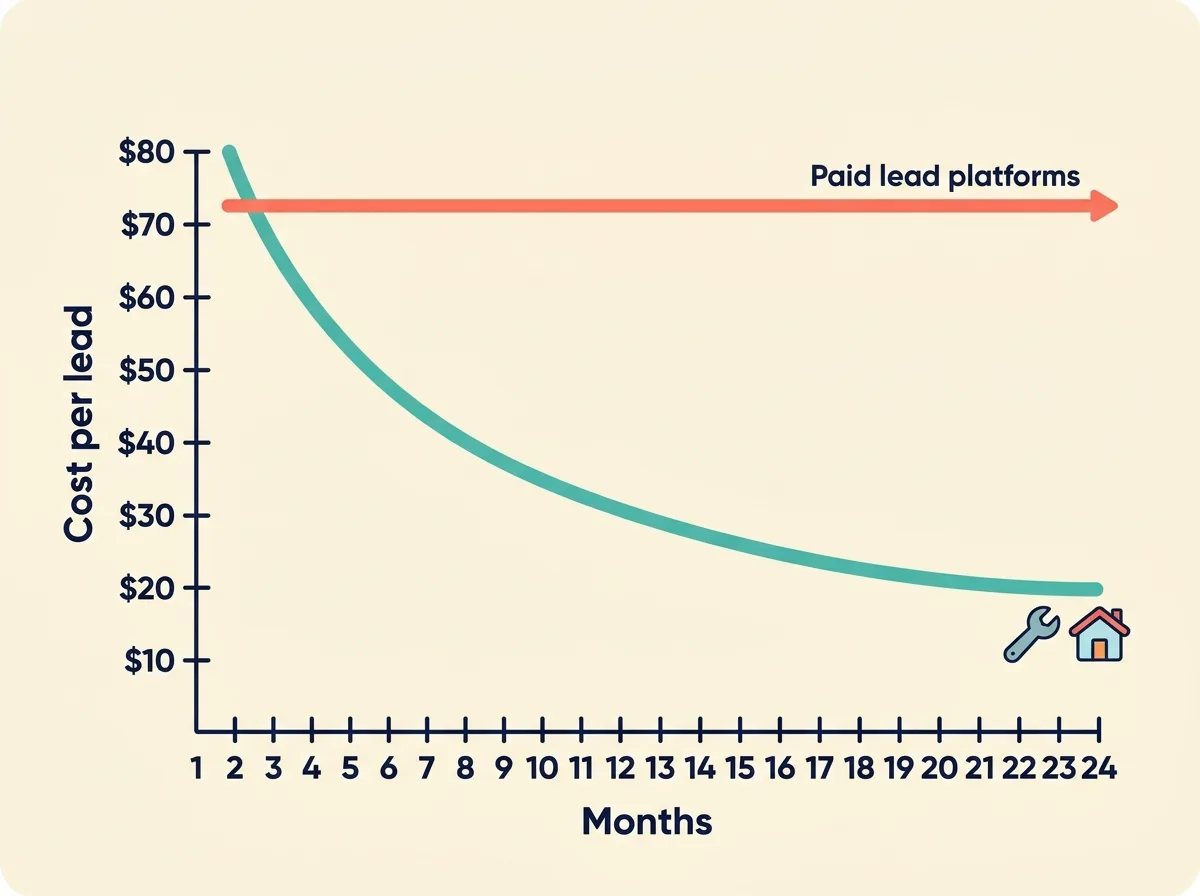
Say the site brings in three leads a month once it’s ranking. Here’s what that works out to:
Channel
Typical cost per lead
Shared with other pros?
Stops when you stop paying?
Angi
$15 to $40, plus membership
Often
Yes
Thumbtack
$10 to $100+
Often
Yes
Google Local Services Ads
$25 to $130
No
Yes
Facebook Ads
$15 to $60
No
Yes
Your website, year one
About $18 (at 3 leads a month)
No
No
Your website, year two
About $10 (at 3 leads a month)
No
No
And those are exclusive leads. Nobody else got the same phone call.
Now the honest part. A website that nobody finds costs the same $29 a month and brings in nothing. New sites usually take three to six months to start ranking in local search. Getting there takes the right setup from day one: city pages, a fast build, and a proper Google Business Profile working alongside it.
Paid leads cost the same every month. Website leads get cheaper the longer the site runs.
So Where Should You Spend?
Not on one thing.
If you need work this month, a paid platform is the fastest route. Angi, Thumbtack, or Local Services Ads can put jobs on the calendar within a week. Nothing wrong with that.
Just don’t build the whole business on it. Every dollar you send to a lead platform is rent. You never own anything.
What I’d do in your boots:
Start with the free stuff. Your Google Business Profile costs nothing and drives a big share of local calls.
Get a website that’s built to rank. Not a pretty page nobody finds. One with real service and city pages.
Use paid leads as a bridge. Keep them running while your own site and profile build up.
Cut back once your own leads come in. That’s where the margin is.
Track where every job comes from, even if it’s just a note in your phone. After three months you’ll know exactly what each channel costs you per job. That number will make the decisions for you.
Frequently Asked Questions
How much does a handyman lead cost on Angi?
Small handyman jobs usually run about $15 to $40 per lead, on top of a membership fee of around $300 a year. Angi doesn’t publish a fixed price list, and the same lead is often sold to several pros at once.
Do you pay for Thumbtack leads that don’t hire you?
Yes. Thumbtack charges when you’re matched with or contact a lead, not when you win the job. If the customer goes quiet or picks someone else, you don’t get that money back.
Are Facebook ads good for handyman leads?
They can be, but the leads are earlier in the decision than someone searching Google. Expect to follow up fast and qualify hard. Calling within a few minutes makes a big difference to how many turn into jobs.
What is the cheapest way to get handyman leads?
Over a full year, your own Google Business Profile and website usually come out cheapest per lead, because the cost stays flat while the leads build up. The catch is time. Paid platforms work faster at the start.
Should I stop using Angi or Thumbtack?
Not straight away. Use them to keep the calendar full while your website and Google profile start ranking. Once your own leads pick up, cut back on the paid ones and keep the margin.
Paid leads are rent. A website is something you own.
Both have a place. But if every job you book comes through a platform that charges you per lead, you’re working for that platform as much as for yourself.
HandySitePro builds custom-coded websites for handyman businesses, set up to rank in local search from day one, with hosting and updates included in one flat monthly price.