Do handymen really need a website in 2026? Here's an honest look at what you're risking without one, and what a good site actually does for your business.
Roland Sta Romana
Handyman website specialist · 15+ years in web development
Published
Updated
Read time
6 min
Most handymen do need a website in 2026. A Google Business Profile gets you into the map results, but your website builds credibility, ranks for longer search phrases, and gives potential customers somewhere to learn about you before they call.
Short answer: no, you don’t need one to survive.
Plenty of handymen have been running steady businesses for years off referrals alone. A full calendar built on word-of-mouth is genuinely impressive. And it works, right up until it doesn’t.
The longer answer is what this post is really about. Because “do I need a website?” is the wrong question. The better question is: what are you giving up without one?
If you’re happy where you are and booked solid indefinitely, maybe nothing. But if you’ve ever had a slow month and wondered where your next job was coming from, a website is one of the most dependable answers to that problem.
Here’s the honest breakdown.
What Most Handymen Use Instead of a Website (And Why It’s Risky)
Rented platforms vs. owned marketing: the key difference for handyman lead generation
Most handymen without a website rely on one or more of these:
Referrals. The gold standard. The problem is you can’t control them. A slow season, a move, or one unhappy customer can dry up the pipeline fast.
Facebook groups and Nextdoor. These work until the algorithm changes, a post gets buried, or the group moderator decides to ban business promotion. You’re building your pipeline on someone else’s platform, subject to their rules.
Google Business Profile alone. Your GBP is valuable real estate, but a standalone listing has limits. You can’t tell your full story, show a gallery, explain your services in detail, or capture leads while you’re on a job. And without a website attached, your GBP carries less authority in local search results.
Word getting around. This is real and it matters. It’s also impossible to scale and hard to rely on during slow periods.
None of these are bad. But all of them share the same weakness: you’re not in control. You’re dependent on platforms, algorithms, and other people’s goodwill.
A website is the one marketing asset that’s fully yours.
What a Website Actually Does for a Handyman Business
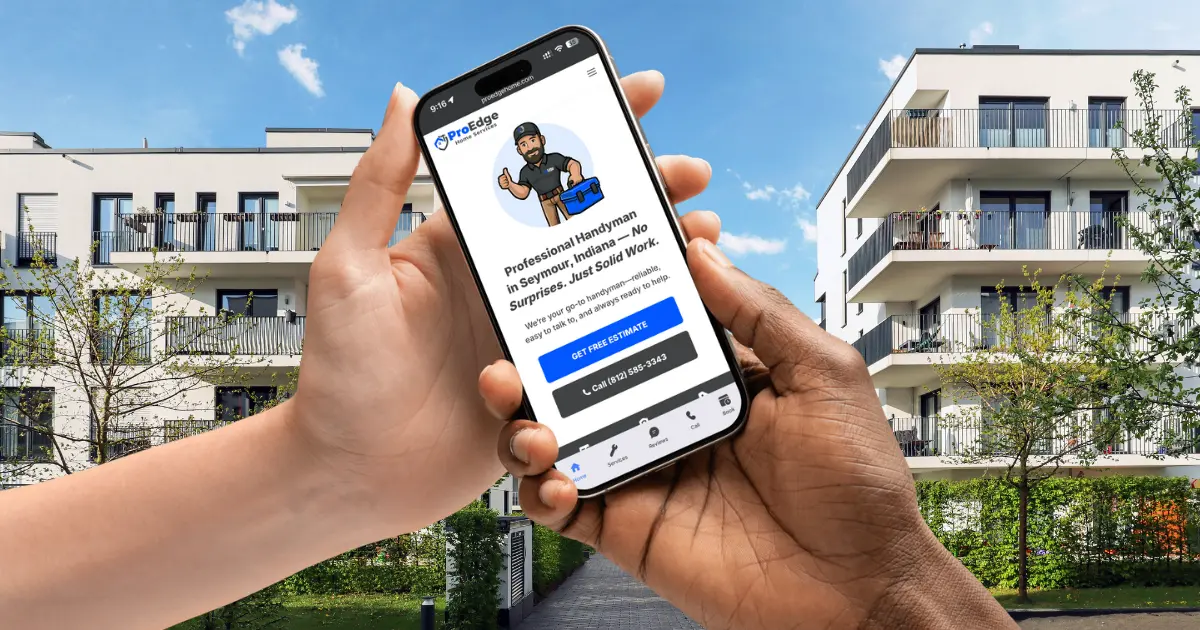
A well-built handyman website puts your phone number one tap away on mobile
A good handyman website doesn’t just sit there looking pretty. It works for you around the clock: when you’re on a job, in the truck, or asleep.
It captures leads you’d otherwise miss. Someone googles “handyman near me” at 10pm on a Sunday. They’re not calling yet. But they’ll browse a few sites, compare them, and call the one that looked most professional in the morning. If you’re not in those results with a solid site, that call goes to a competitor.
It builds credibility before you say a word. Homeowners, especially first-time clients, vet you before they pick up the phone. A clean, professional website with reviews, photos, and clear service descriptions tells them you’re legitimate. A missing website (or a weak one) raises questions.
It shows up in “near me” searches. When your site has your service area, the right keywords, and a fast load time, Google starts surfacing it for local searches. That’s consistent, free lead generation that doesn’t require you to post anything or ask anyone for a referral. (Here are 5 fixes that get more leads from a handyman website once it’s live.)
It answers the questions people always ask. What do you charge? What areas do you serve? How do I book? A well-built site handles all of this, freeing you up to just show up and do the work.
The One Situation Where You Might Not Need One Yet
If you’re in your first 3 months of business and you’re still figuring out your services, pricing, and target area, a website can wait. You don’t want to launch a site that says “serving Austin, TX” and then realize you’re moving. Get your basics locked in first.
Likewise, if you’re booked 6–8 weeks out, turning down jobs, or thinking about hiring, a website is a growth tool, not an emergency. You might want it eventually to raise your rates or attract better clients, but it’s not urgent.
For everyone else, the answer is yes. You need one.
What a Good Handyman Website Looks Like
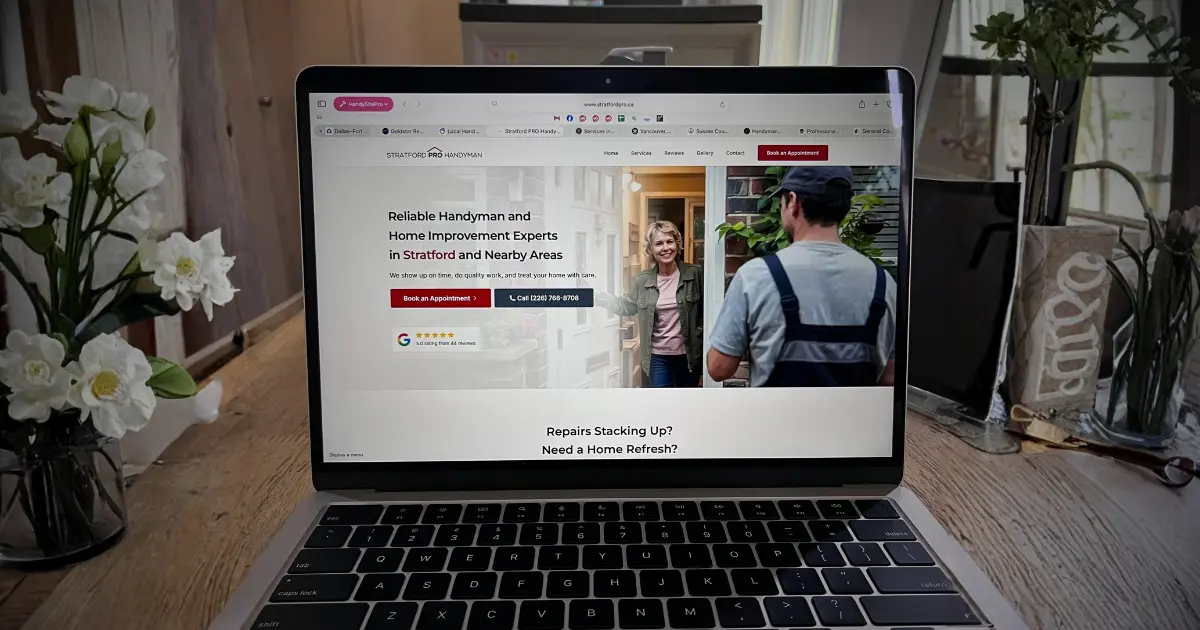
A HandySitePro-built website: services, reviews, and contact info above the fold
Not every website is worth having. A slow, cluttered, hard-to-navigate site can actually hurt you. Visitors bounce fast, and Google notices.
Here’s what a site that actually works should have:
A clear headline that says who you are, where you work, and what you do, visible within the first few seconds of landing on the page.
Your phone number front and center. One tap to call. Not buried at the bottom.
A services page that describes what you actually do. Not just a list of words, but brief descriptions that help customers understand what to expect.
Real photos. Before/after shots, completed jobs, maybe you on the job. Stock images don’t build trust. Your actual work does.
Reviews and testimonials. Social proof from real clients, ideally with names and locations.
A service area page. This is one of the most underused pages on handyman websites, and one of the most important for local SEO. See the full handyman website checklist →
Fast load time. This one is technical but critical. Most handyman sites built on Wix or Squarespace are slow on mobile. Google notices. Visitors notice too.
Frequently Asked Questions
Do I need a website if I’m already on Google Business Profile?
Your GBP is a great start, but it works better when paired with a real website. A website gives Google more to index, lets you rank for more searches, and gives potential customers a deeper look at your business before they call.
Can I just use Facebook instead of a website?
Facebook can supplement your marketing, but it shouldn’t replace a website. You don’t own your Facebook page. Meta does. Algorithm changes, account restrictions, or platform shifts can wipe out your lead flow overnight.
How much does a handyman website cost?
It depends on how it’s built. DIY platforms like Wix run $0–$30/month but take significant time to set up. Agencies charge $2,500–$10,000+ upfront. Purpose-built services like HandySitePro’s handyman website design start at $29/month with a setup fee, and the site is done for you in 1–2 weeks. For a full breakdown, see how much a handyman website should cost or view our flat-rate pricing.
Will a website actually get me more calls?
Yes, if it’s built correctly. A site with proper local SEO, fast load speeds, and clear contact options can consistently generate inbound leads without any ad spend.
What pages does a handyman website need?
At minimum: Home, Services, Reviews, Gallery, About, FAQ, and a Contact/Booking page. Those 7 pages cover the full decision-making journey of a homeowner vetting a handyman for the first time.
You don’t need a website to survive as a handyman. But if you want consistent leads that don’t depend on referrals, algorithms, or slow months, a well-built website is the most reliable tool you can have.
HandySitePro builds custom-coded websites specifically for handyman businesses. Seven pages, done for you, live in 1–2 weeks. No WordPress, no templates, no agency markup.